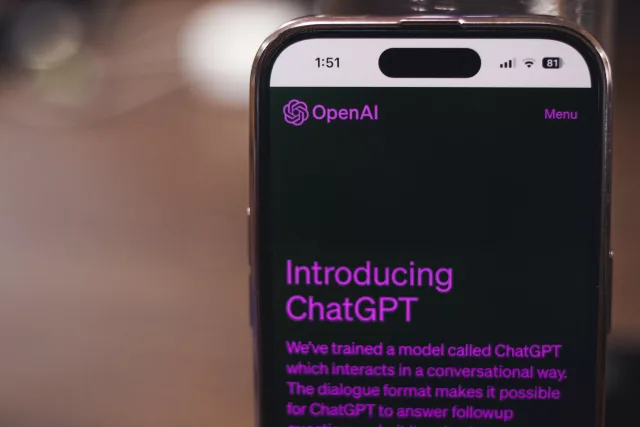
On September 14, 2026, I was invited to Exploring AI with DeepMind: A Community Meetup in Bangkok. GDG Bangkok organised the event at SCBX NEXT TECH, with speakers from Google, Google DeepMind, and the local community. You can find the details on the official event page.
I couldn't stay until the end, but I enjoyed the sessions I joined and came away with ideas to try.
In my LinkedIn recap, I highlighted five topics: developers and AI builders, memory and context, Knowledge Catalog, agent identity, and anomaly detection. The last two were especially relevant to my PhD research on verification and validation of agentic AI systems.
Below are those topics, some background to explain them, and the full agenda. The examples are my own explanations of the ideas.
The Evening's Programme
The agenda began with networking and an introduction, followed by keynotes from Saad Hamid, Regional Lead for Developer & Builder Ecosystem at Google, and Saruj Thipsena, Country Manager for Google Cloud Thailand.
Ivan Leo, who works in Developer Experience at Google DeepMind, was listed for What's new from DeepMind and a fireside chat hosted by Saruj.
The later programme included an academic session from Asst. Prof. Ekapol Chuangsuwanich, Deputy Director of Chulalongkorn University's Artificial Intelligence Center. Kamolphan Liwprasert was also scheduled to present Road to DevFest: Building Interactive Platform with Antigravity.
Thank you to Saad, Saruj, and Ivan for sharing their insights. I wish I had more time to stay for the whole programme.
Developers and AI Builders
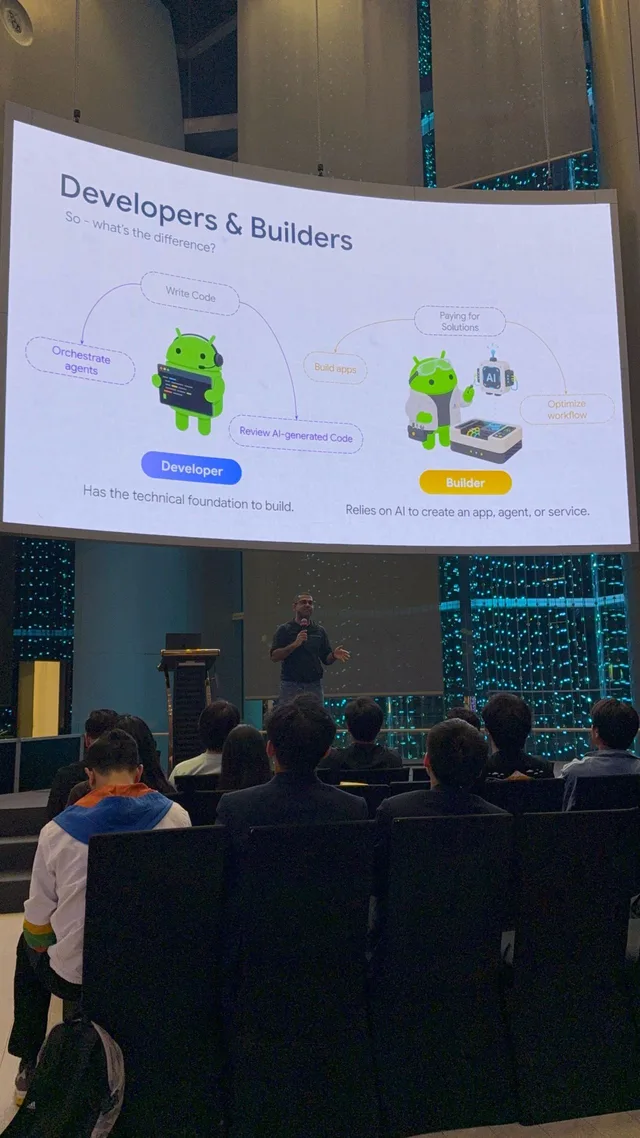
The difference between developers and AI builders caught my attention. The slide in my photo showed developers writing code, coordinating agents, and reviewing code made by AI. It described builders as people who use AI to create apps, agents, or services and improve how they work.
I see these as overlapping roles. A developer can use AI to try an idea quickly. Someone with less coding experience can also use it to make a first version of a tool for a problem they know well.
The support each person needs may be different. A developer might want to understand how the code is organised. A new builder might need help explaining the task and checking whether the result works.
For both, a clear goal and a way to check the result are useful starting points. That is a helpful idea to bring into community workshops.
Memory and Context for Agents
Memory and context were two more topics I mentioned in my LinkedIn post. In simple terms, context is the information available to an agent while it works. Memory lets it save and look up information beyond the current conversation.
Google's Agent Development Kit documentation explains this through sessions, state, and memory. A session holds a conversation and its history. State stores data used in that conversation. Memory can hold searchable information from earlier sessions or other sources.
This raises some practical questions:
- What does the agent need to know for this task?
- Which source should it use when information conflicts?
- How do we update old information?
- Which information belongs to a particular user or project?
For example, an agent could save the steps for publishing a website and use them again later. If those steps change, the saved information needs to change too.
That example shows why remembering something is only useful when the information is still correct and relevant.
Knowledge Catalog: Helping Agents Understand Data
Knowledge Catalog was another topic that caught my attention. It relates to a simple question: can an agent understand the data it finds?
Google describes Knowledge Catalog as a way to organise information about data, including what it means and the rules for using it. That gives agents more background when they search for data or answer questions about it.
Here is a simple example. Suppose you ask an agent how many active customers a company has. It finds a customer table, but what does “active” mean? Someone who bought something this month? Someone with a paid subscription? Someone who signed in recently?
The agent needs the right definition as well as the right data. It also needs to know whether the data is current and whether it is allowed to use it.
This is why the topic interests me. A query can run without errors and still answer the wrong question. Clear definitions make the result easier to check.
Agent Identity, Permissions, and Anomaly Detection
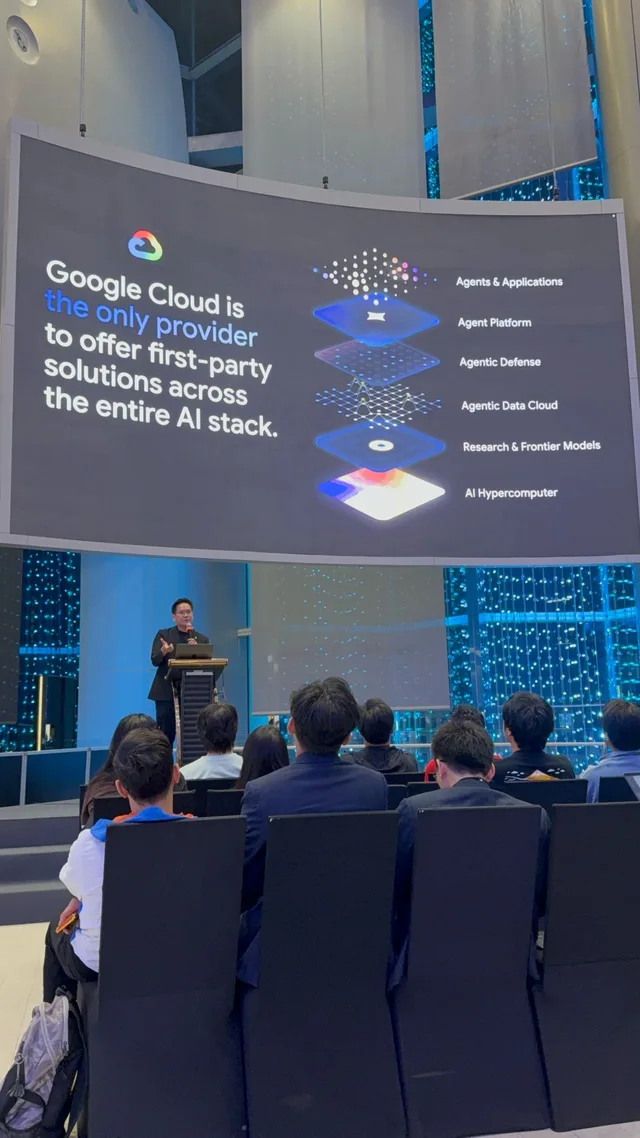
Agent identity and anomaly detection stood out because of my research. They relate to three questions: which agent took an action, what was it allowed to do, and did its behaviour need a closer look?
Google's Gemini Enterprise Agent Platform introduction describes Agent Identity as giving each agent a unique digital identity that can be verified. It also describes Agent Anomaly Detection as using statistical models and an AI model to flag unusual reasoning.
Identity and permission are related but different. Knowing which agent is acting helps us track its actions. Access rules define which tools and data it can use.
For example, a research assistant might be allowed to read selected documents and save a draft. Sending that draft to someone else is a separate action, so it needs its own permission rules.
Anomaly detection means looking for unusual behaviour. An alert can point to something worth checking, but it does not prove that an action was wrong. It also does not guarantee that every mistake will be found.
These ideas connect directly to the takeaway I shared after the meetup: an agent needs suitable information, clear permissions, and checks on what it does.
Why This Connects to My PhD Research
My PhD research focuses on verification and validation of agentic AI systems. Put simply, this involves checking whether a system follows its requirements and whether it does the job it is meant to do.
The meetup topics fit into that wider question. An agent might use only approved tools but still give a wrong answer because its information is out of date. It might also give a useful answer after taking an action it was not allowed to take.
Those examples show why the final answer is only part of what needs checking. The task, the information available, the actions taken, and the permissions all matter.
My main takeaway is the same one I shared on LinkedIn: building an agent is only part of the work. Giving it the right context, managing its permissions, and checking its behaviour deserve just as much attention.
The Full Evening Agenda
This is the full published agenda, including sessions after I left.
| Time | Session and speakers |
|---|---|
| 5:30 PM | Check-in and Networking |
| 6:30 PM | Opening and Introduction |
| 6:45 PM | Keynote - Google Developer Relation Saad Hamid, Regional Lead - Developer & Builder Ecosystem, Google |
| 6:55 PM | Keynote - Google Cloud Thailand Saruj Thipsena, Country Manager, Google Cloud Thailand |
| 7:15 PM | What's new from DeepMind Ivan Leo, Developer Experience, Google DeepMind |
| 7:55 PM | Fireside Chat Host: Saruj Thipsena, Country Manager, Google Cloud Thailand Speaker: Ivan Leo, Developer Experience, Google DeepMind |
| 8:15 PM | Local Expert - AI in Academic Perspective Asst. Prof. Ekapol Chuangsuwanich, Deputy Director, Chulalongkorn University Artificial Intelligence Center |
| 8:35 PM | Road to DevFest: Building Interactive Platform with Antigravity Kamolphan Liwprasert |
| 8:55 PM | Closing and Group Photo |
The People Made the Visit Special
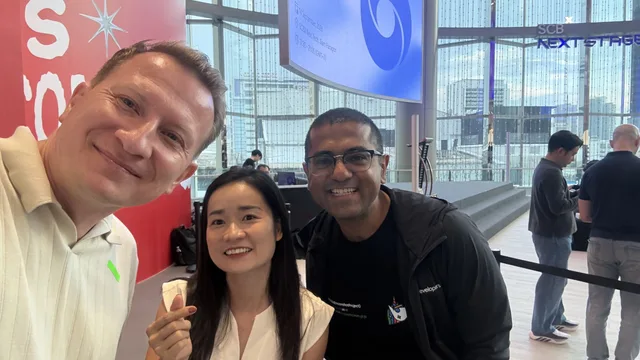
I was happy to finally meet Saad Hamid and Nhi Nguyen in person.
It was also great to see Phantip Kokilanon, Komes Chandavimol, Charunthon Limseelo, and other familiar faces. I am sorry I did not have enough time to catch up properly or talk to everyone this time.
Thank you to GDG Bangkok, the speakers, and everyone who helped organise the meetup. I appreciated the invitation and the chance to join the community in Bangkok. And thank you for the DeepMind cap! 🧢
I look forward to trying some of the ideas from the sessions and continuing the conversations at the next meetup.
Event Links and Further Reading
- Official GDG Bangkok event page and programme
- My original LinkedIn recap and full photo carousel
- Google's guide to sessions, state, and memory
- Google Cloud Knowledge Catalog
- Introducing Gemini Enterprise Agent Platform
- My Codex workshop recap from Chiang Mai University
Cheers, proflead! ;)